
Help with a leaking water heater, without the guesswork
Most water heater leaks come from a handful of places: a fitting or pipe connection, the drain valve, the temperature and pressure relief valve, or the tank itself. Some of these are straightforward repairs. A leaking tank usually means replacement. The right answer depends on where the water is actually coming from — and that is what a professional diagnosis is for.
Stanton Water Heater Help does not perform plumbing work. We provide information about common water heater problems and operate a referral service that may connect you with an independent plumbing provider serving the Stanton area.
Common signs of a leaking water heater
- Water pooling under or around the base of the unit.
- Moisture, rust streaks, or corrosion on the tank jacket or fittings.
- Dripping from the temperature and pressure relief valve or its discharge pipe.
- A damp or corroded drain valve near the bottom of the tank.
- Hot water running out faster than usual, or rumbling and popping sounds from sediment.
- Discolored or rusty hot water from your taps.
Not every sign means the tank has failed. Water on the floor can travel from a fitting above, and condensation can mimic a leak in humid conditions. Our guide to water heater leak diagnosis explains how a professional tells the difference.
What to do when your water heater leaks
- Stay safe first. Keep away from standing water near electrical equipment, and never touch wet electrical components.
- If you smell gas, leave. Get out of the area and contact your gas utility or 911 from a safe location. Do not operate switches or appliances.
- Shut off the water if it is safe. The cold water shut-off valve is usually on the pipe above the heater. Do not force a stuck or corroded valve.
- Limit the damage. If safe, move belongings away from the water and place towels or a container under active drips.
- Contact a qualified professional. A licensed plumbing provider can diagnose the source and advise on repair or replacement.
For urgent situations, see our page on emergency water heater repair steps. Please note we are a referral service, not an emergency-response organization, and we cannot promise immediate or 24/7 assistance.
Common leak sources and components
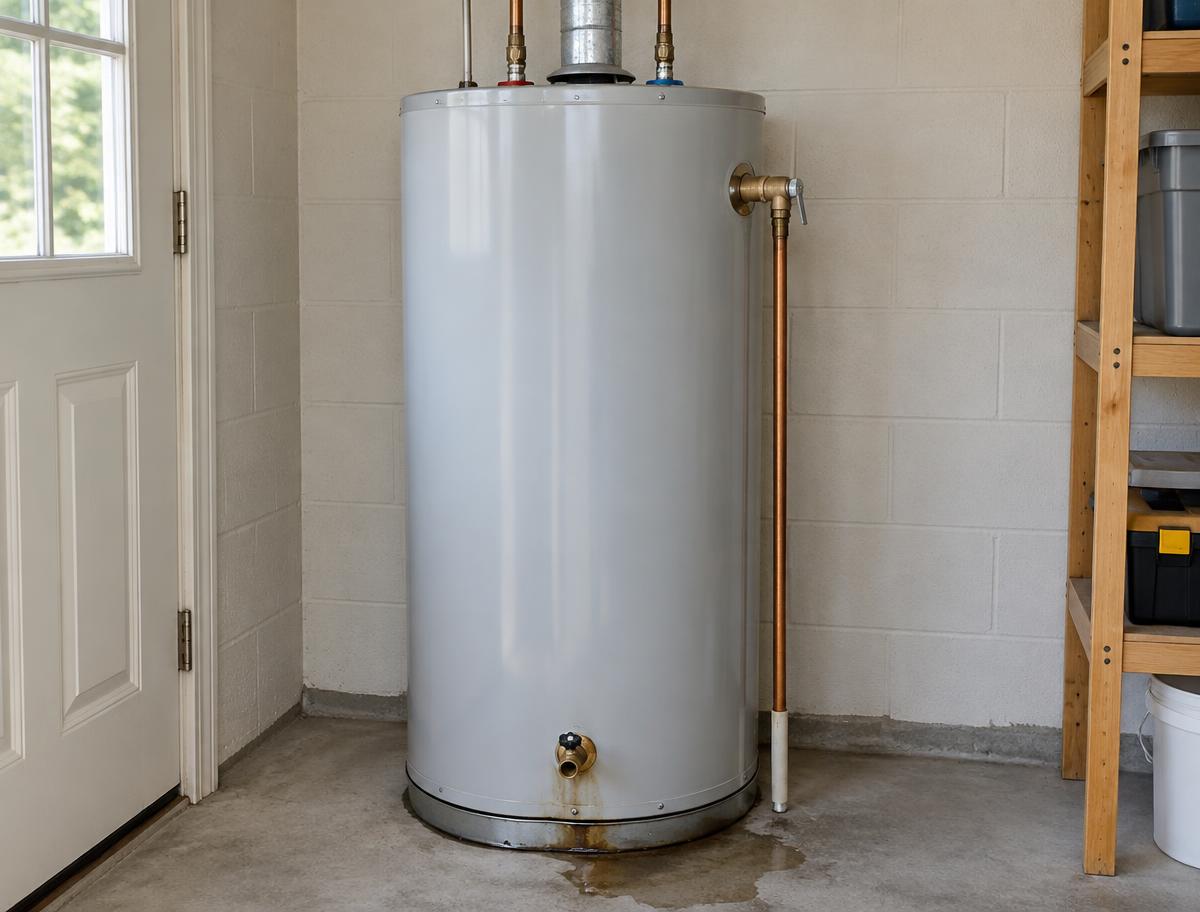
Fittings and pipe connections
The cold water inlet and hot water outlet connections on top of the tank can loosen or corrode over time. These leaks are often repairable by tightening or replacing the fitting.
Drain valve
The valve near the bottom of the tank, used for draining and flushing, can drip if it is worn or not fully closed. Replacement is usually a simple repair.
Temperature and pressure relief valve
The T&P relief valve is a safety device that releases water if pressure or temperature gets too high. Discharge can mean the valve failed — or that it is responding to a real system problem. Learn more on our pressure relief valve repair page. This valve must never be capped, plugged, or disabled.
The tank itself
Internal corrosion can eventually perforate the steel tank. A leaking tank generally cannot be repaired, and replacement is the usual recommendation.
Water heater repair options
Depending on the diagnosis, a provider may replace a valve or fitting, repair a connection, address a thermostat or heating element problem, or recommend replacing the unit. The right option depends on the leak source, the age and condition of the heater, and the cost of repair relative to replacement. Our water heater repair page walks through these decisions in detail.
Tank versus tankless water heater problems
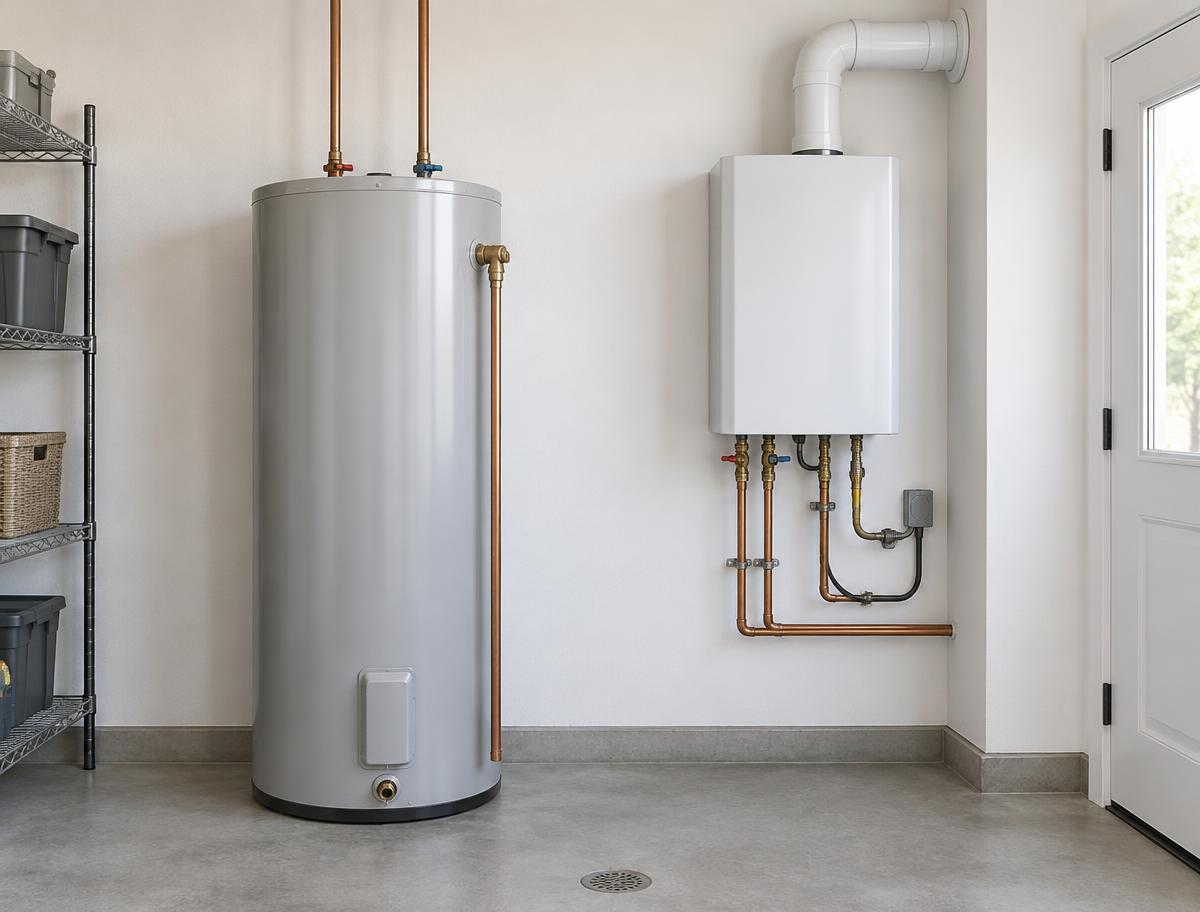
Traditional tank heaters store hot water and most often leak from fittings, valves, or a corroded tank. Tankless units heat water on demand; they can leak at water connections or internally, and scale buildup from hard water can cause error codes and reduced performance. If you have a tankless unit, our tankless water heater repair page covers the differences.
Repair versus replacement: how to think about it
A useful rule of thumb: if the tank itself is leaking, replacement is usually the only option. If a valve or fitting is leaking on a newer unit, repair often makes sense. For an older unit with recurring problems, a provider may suggest comparing the repair cost against the price and efficiency of a new unit. Ask for a written estimate either way.
How a water heater leak is diagnosed
A professional will typically dry the area, inspect from the top down, check each fitting and valve, and determine whether moisture is coming from the plumbing, a component, condensation, or the tank. Knowing the source before authorizing work helps you avoid paying for the wrong repair. Read more about how leak diagnosis works.
Service area: Stanton and nearby Orange County communities
Our referral service focuses on Stanton, California, and we also take inquiries from nearby communities. Coverage always depends on the independent provider, so please confirm your address when you call.
How the referral process works
- You contact us and describe the problem — where the water is, what the unit is doing, and your location.
- We may connect you with an independent plumbing provider who serves your area.
- You speak with the provider directly about scheduling, pricing, licensing, and any other questions.
- The provider performs any diagnosis or repair. All work, warranties, and costs are between you and the provider.
Stanton Water Heater Help does not employ plumbers, does not perform repairs, and does not guarantee that a provider will be available or will accept the job.
What to ask an independent plumbing provider
- Are you licensed and insured for plumbing work in California? Ask for the license number.
- Do you serve my specific address, and what is your availability?
- Is there a diagnostic or trip fee, and is it applied to the repair?
- Can you provide a written estimate before starting work?
- What warranty covers the parts and labor?
- If replacement is recommended, what are my options and what affects the installation cost?
Ready to take the next step?
If your water heater is leaking or not working, you can call us at (714) 790-1558 to ask about a referral, or visit our contact page for all the ways to reach us. If you are still researching, the service pages above cover each common problem in more depth.